Posted: May 2023
MesoRFA Newsletter: Spring 2023 Edition
- Message from the Executive Director
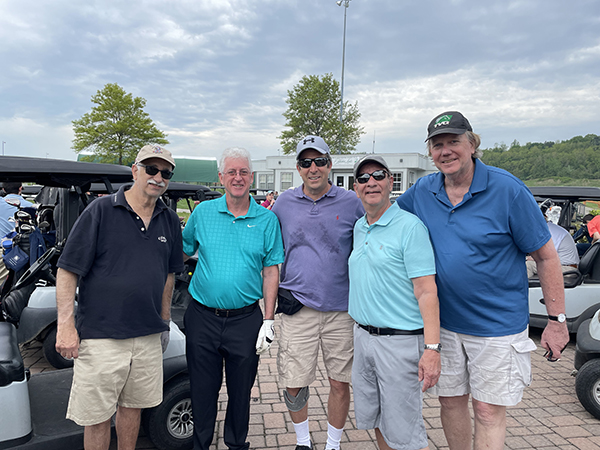
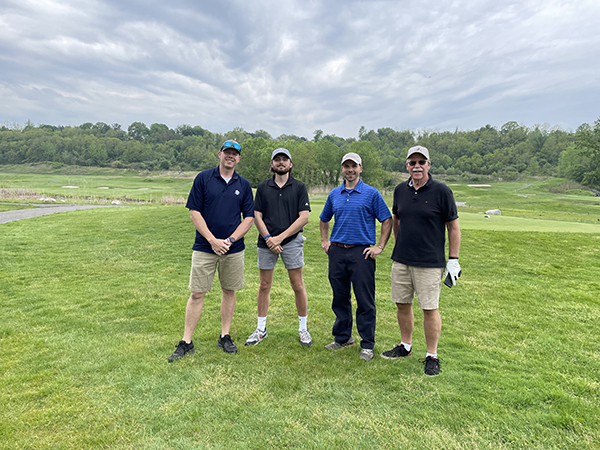
- 2nd Annual Tommy Engelhard Memorial Golf Out
- California State Pipe Trades Aim to Cure Mesothelioma: Clay Shot at Birdslanding
- Southern California Pipe Trades District Council 16 Golf Invitational
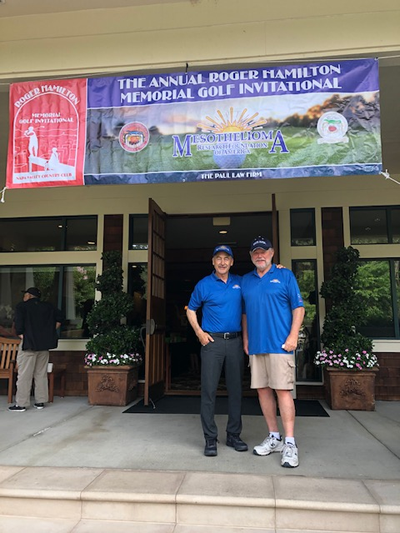
- Heat & Frost Local 16 and Western Conference Roger Hamilton Memorial golf Tournament
- Southern California Pipe Trades District Council 16 Aim to Cure Mesothelioma Clay Shoot
Posted: December 16, 2022
MesoRFA Newsletter: Spring 2022 Edition (May 2022)
- Message from the Executive Director
- California State Pipe Trades Aim to Cure Mesothelioma: Clay Shot at Birdslanding
- Southern California Pipe Trades District Council 16 Golf Invitational
- Heat & Frost Local 16 and Western Conference Roger Hamilton Memorial golf Tournament
- Southern California Pipe Trades District Council 16 Aim to Cure Mesothelioma Clay Shoot
Event Date: October 3, 2022
District Council 16 Aim to Cure Mesothelioma at Moore N Moore
The Mesothelioma Research Foundation of America would like to congratulate and thank the Southern California Pipe Trades District Council 16 for organizing a fantastic event to help find a cure for mesothelioma. We returned to the Moore N Moore Sporting Clays Facility with a huge turnout, including UA International Representative Aaron Stockwell and Executive Director of the California State Pipe Trades, Mike Hartley, who joined us in generating an event record of over $55,000 for mesothelioma research! 100% of the money generated at the event will go directly to mesothelioma research to support clinical trials for better treatment options with the hope for an eventual cure.
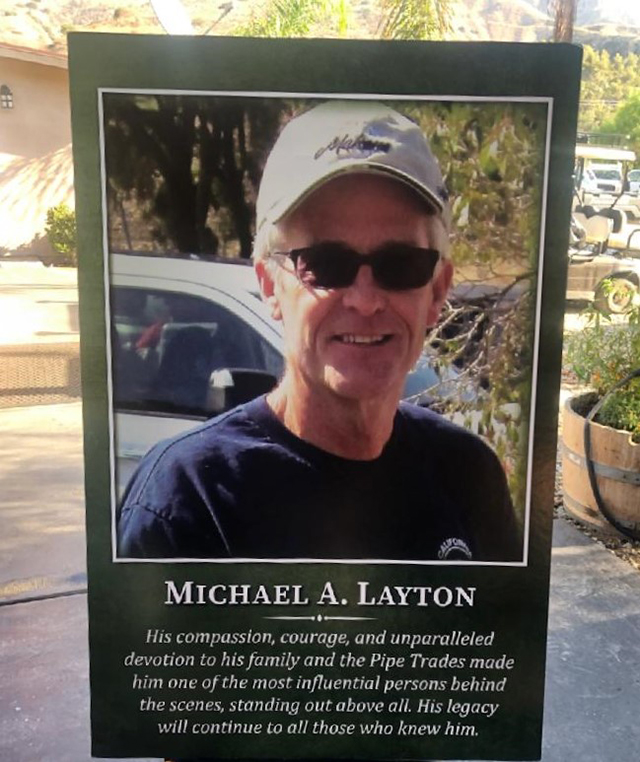
You may recall that we lost a dear friend in 2021, former DC16 Business Manager Mike Layton, just a few weeks prior to last year’s event. Mike was the driving force behind bringing a clay shoot to Southern California and we are honored to hold the event in his memory. Our continued thoughts go out to the entire Layton Family and the Foundation would like to thank everyone who came out to spend the day remembering our friend and support such a great cause.
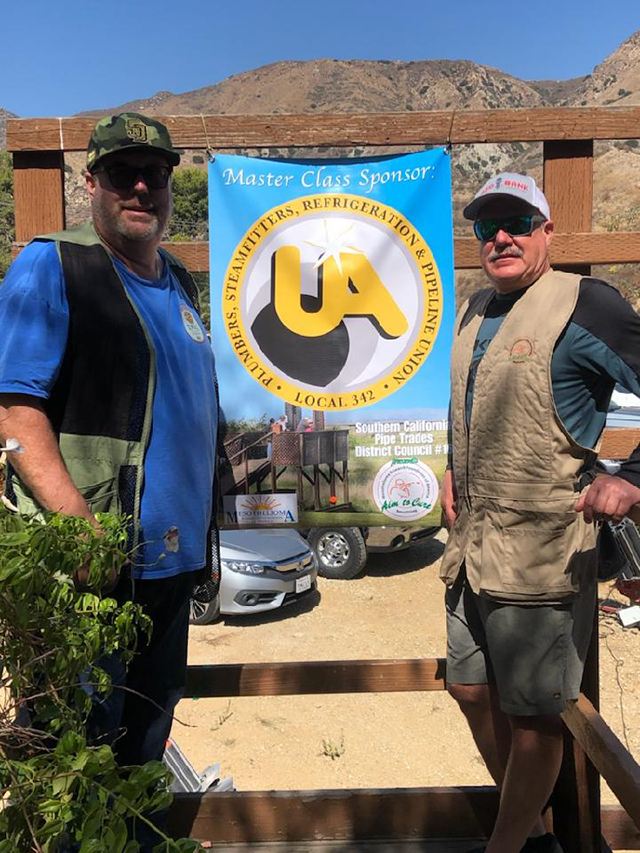
- Mike Harley Aaron Stockwell-640px.jpg
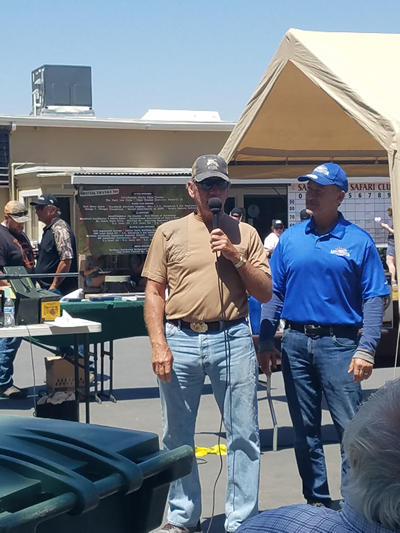
Executive Director of the California State Pipe Trades, Mike Hartley and UA International Representative, Aaron Stockwell came to support our cause. Thank you, Mike and Aaron, for traveling to join us!
- Mike Layton-640px.jpg
Mike Layton was the driving force behind bringing this event to Southern California and we are honored to hold the event in his memory. Our continued thoughts go out to the entire Layton Family.
- John Ferruccio-2022-640px.jpg
DC16 Organizer, John Ferruccio and his team have done a fantastic job in planning and coordinating the Aim to Cure Mesothelioma clay shoot and other DC16 events. Thank you, John!
- Dr Gill-640px.jpg
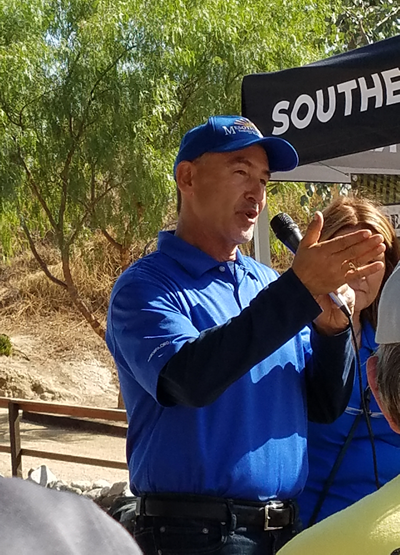
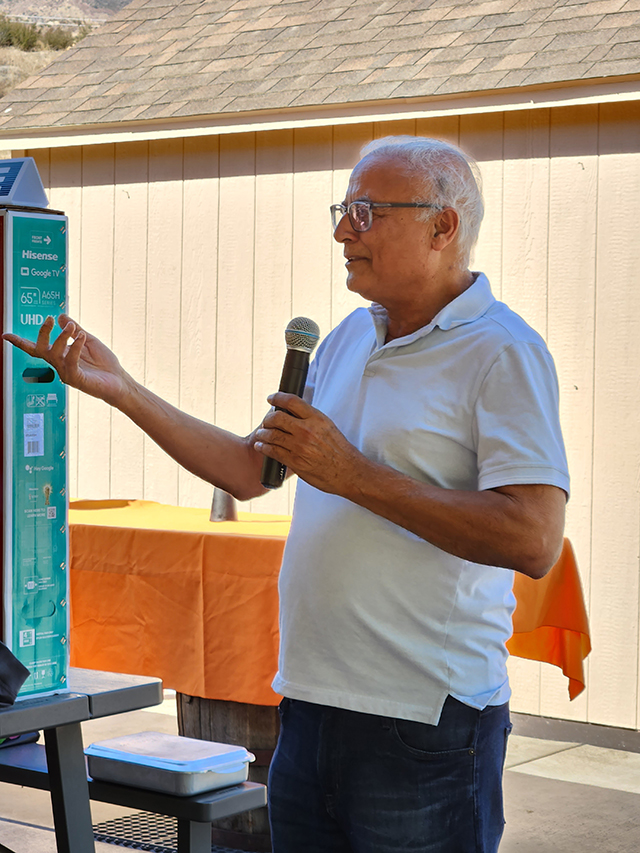
Dr. Parkash Gill telling supporters how their donations are helping to develop new treatments, highlighting the combination of EphB-4 and Merk PD-1 antibody proving to be so successful that the FDA has designated it a breakthrough treatment!
- Elizabeth and Jerry-2022-640px.jpg
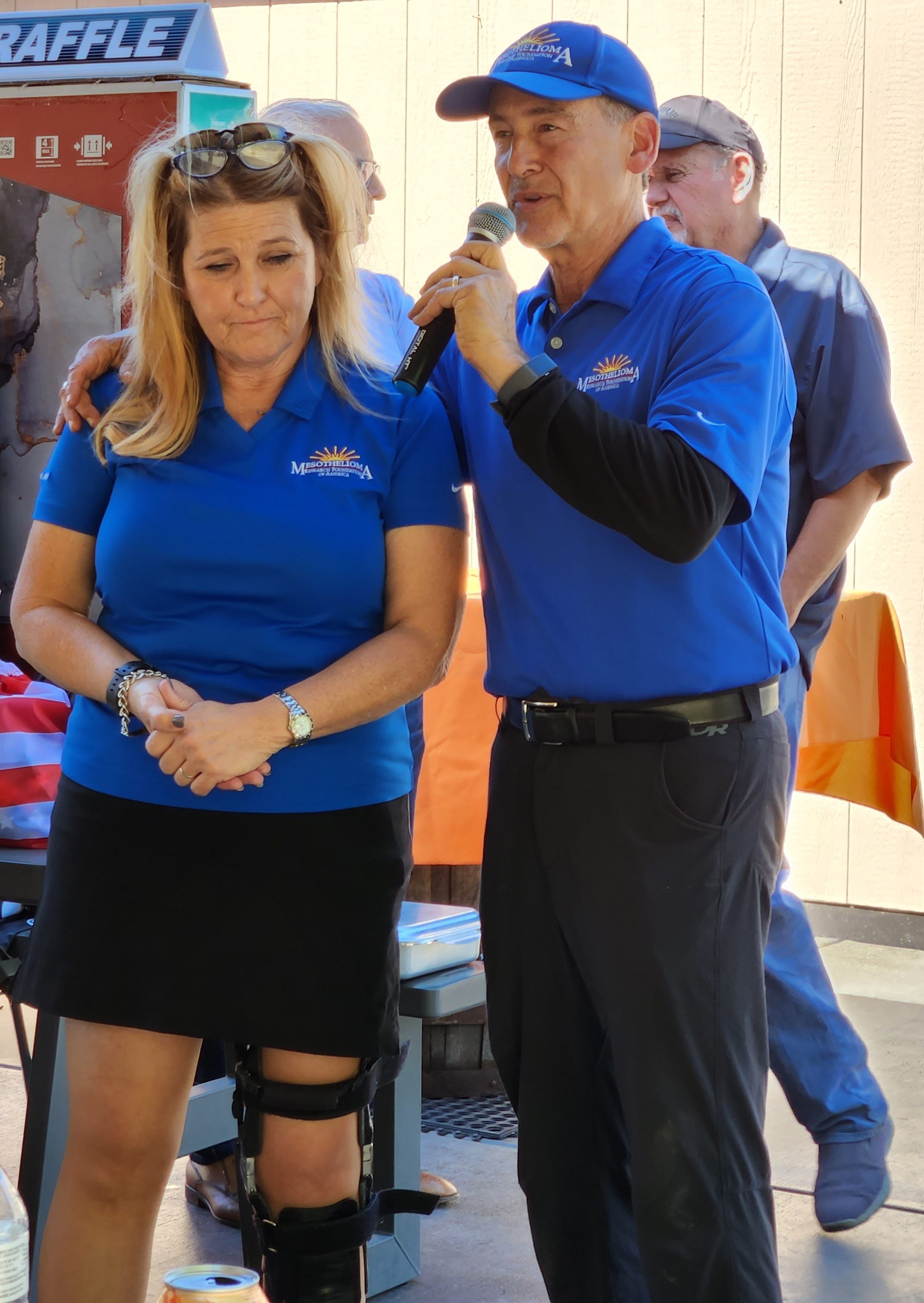
Foundation Executive Director, Elizabeth Ann Paul and CFO, Jerry Neil Paul thanking Southern California Pipe Trades DC16 for holding another great event and talking about the grass roots efforts of the Foundation.
- 3rd-640px.jpg
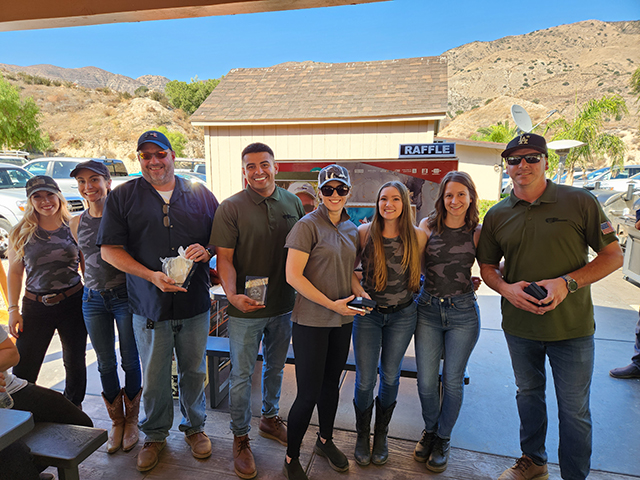
3rd Place
- 2nd-640px.jpg
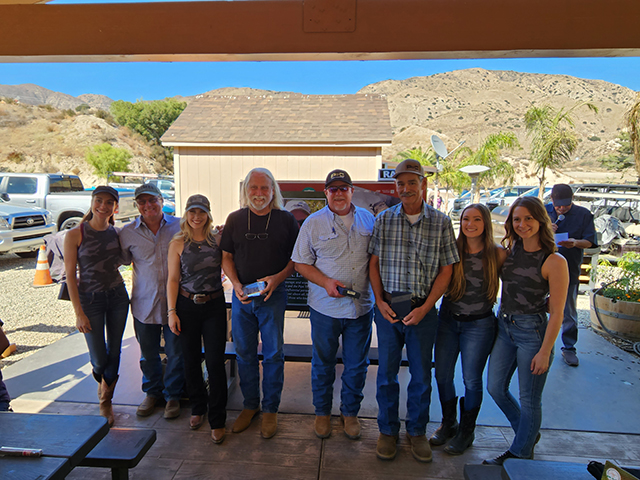
2nd Place
- 1st-640px.jpg
1st Place
- Top Shot-640px.jpg
Top Shot !
- Local 250 Crystal-640px.jpg
Local 250 Crystal
After a great day on the course, supporters learned where their hard earned donations are going and how they are being used to fight this terrible disease. The Foundation’S Board Member and CFO, Jerry Neil Paul along with Executive Director Elizabeth Paul thanked DC and John Ferruccio for organizing another fantastic event and spoke about the roots of the Foundation. Dr. Parkash Gill then gave an update from the lab and highlighted the development of immunotherapy treatment EPhB-4 as a direct result of the donations and the hard work of so many. Dr. Gill then passed along the fantastic news that the combination of EphB-4 and Merk PD-1 antibody are proving to be so successful that the FDA has designated it a breakthrough treatment!
The Foundation would like to personally thank all of those who organized and supported this year’s events. Without the support and skills of people such as DC 16 Business Manager Rodney Cobos, DC 16 Assistant Business Manager Doug Marian and Director of Organizing John Ferruccio events like these would not be as successful as they are. Their leadership and their army of volunteers and supporters, make ALL of this possible and we THANK ALL OF YOU for your support and dedication!!!
Event Date: September 12, 2022
20th Annual Roger Hamilton Memorial Golf Invitational
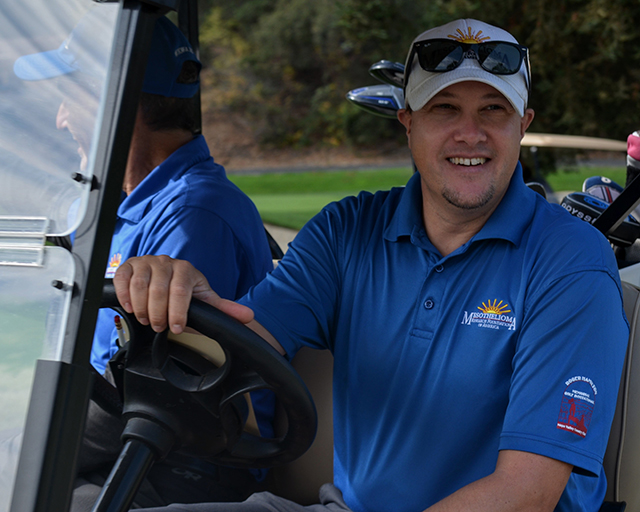
On September 12, 2022, the 20th Annual Roger Hamilton Memorial Golf Invitational returned to the Napa Valley Country Club to generate funds for mesothelioma cancer research and clinical trials that will lead to better treatment options. We would like to thank each and every sponsor, golfer and volunteer who came out to help us generate approximately $100,000! As always, 100% of the funds generated will go toward supporting Dr. Parkash Gill’s research at the USC Norris Comprehensive Cancer Center.
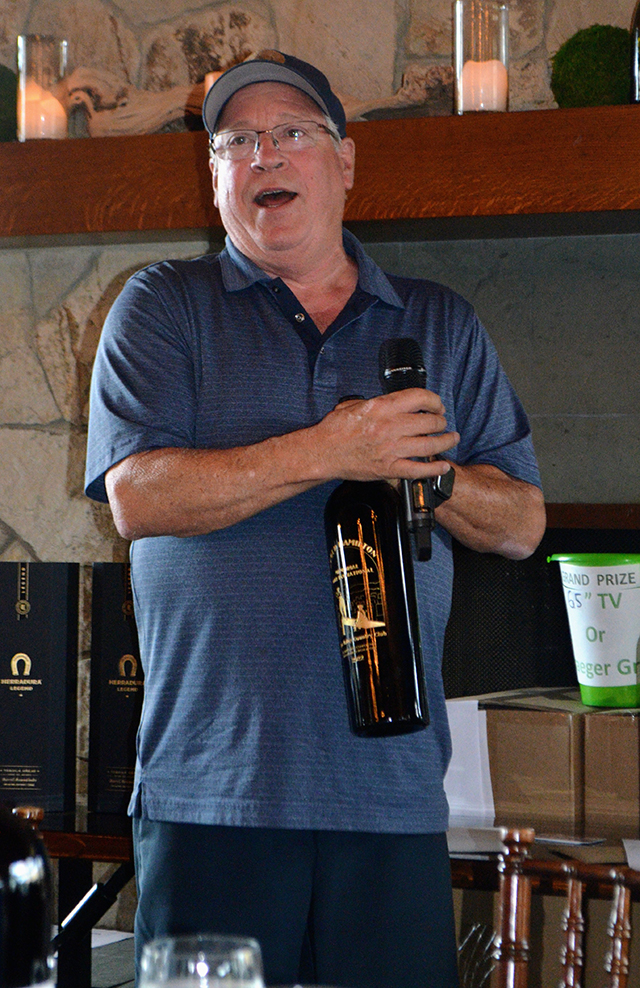
- Mike Patterson-2022-640px.jpg
Local 5 Heat & Frost Insulator Business Manager, Mike Patterson, traveled from Los Angeles to join us. Roger Hamilton was a career Local 5 Insulator, making the event that more special for those who came to honor their brother.
- Shane-2022-640px.jpg
Foundation’s Assistant Executive Director, Shane Rucker heading out onto the course with the Foundation’s Founding Board Member and CFO, Jerry Neil Paul.
- Billy and Daugther-640px.jpg
Local 16 Heat & Frost Insulator President Billy Hodges volunteering his time with his daughter as they check supporters in to kick off their day. We thank everyone who gave up their day to volunteer, it means so much to us!
- Chris Alan Mel-640px.jpg
Local 16 Heat & Frost Insulator Business Manager, Chris Greaney, Local 16 Retirees President Alan Pierce and Event Chairman, Mel Breshears take time for a picture after a busy day. The Local 16 staff and volunteers who helped around the course are an amazing group of people to work with, thank you all!
- Dr. Gill Speaking-2022-640px.jpg
Dr. Parkash Gill expresses his gratitude towards supports, speaking on how their donations have helped to develop new treatments such as EphB-4. We are ecstatic with the results from the lab and the FDA designation of a breakthrough treatment!
- EAP-2022-640px.jpg
Foundation’s Executive Director, Elizabeth Ann Paul also volunteered her time on the course. Making the rounds to the volunteers and helping on the putting green. Thank you Elizabeth!
- Fortino-2022-640px.jpg
Local 16 Heat & Frost Insulator Business Agenet, Fortino Curiel serves as a Committee Member and helps with day of logistics such as the Hole in One Harley. Thank you Fortino!
You may recall that the event was established in 2002 by U.A. International Representative of the Pipetrades Jim Kellogg, and then California Building Trades President and Vice President, Bob Balgenorth, and Roger Hamilton. Roger was a former Business Manager of the Heat & Frost Insulators and it was Roger’s idea to support research into a cure for mesothelioma. Roger had been diagnosed with cancer several months before the first tournament and was determined to make the event a success. After Rogers passing, his wife Cindy Hamilton took over as Chairwoman and grew the event exponentially before the continued support of Doug Gamble and Mel Breshears of the Heat and Frost Insulators. Doug and Mel have planned and hosted the event over the last 5 years, and we cannot thank them enough for taking it upon themselves to ensure the continuation of the event and the honoring of Roger Hamilton’s memory.
To date, the Roger Hamilton Memorial Golf Invitational has raised approximately 1.8 million dollars for mesothelioma research! We owe our gratitude to the Western States Conference Heat and Frost Insulators, the Local 16 Heat and Frost Insulators, as well as all the building trades groups and vendors who continue to support the battle to defeat mesothelioma cancer. The success of the event is resulting in fantastic results in the lab at the USC Norris Comprehensive Cancer Center and is highlighted by Dr. Parkash Gill’s development of immunotherapy treatment EPhB-4. The combination of EphB-4 and PD-1 antibody are proving to be so successful that the FDA has designated it a breakthrough! The Foundation’s Executive Director, Elizabeth Paul and Dr. Gill were ecstatic to share this news with supporters and added that there several doctors affiliated with UC Davis, University of Chicago and others who are ready to offer the treatment to their patients suffering from this horrible disease.
Without the continual support from the staff and family of the Local 16 Heat and Frost Insulators, an event of this magnitude would not be possible. We thank Committee Chairman Mel Breshears, Co- Chair Chris Greaney, Chairman Emeritus Doug Gamble, Craig Rossi, Bill Hodges, Mark Plubell, Ben Espinoza, Fortino Curiel, China Soto, Geoff Millar, Alan Pierce, Jerry and Elizabeth Paul, and Shane Rucker. Without your efforts and energy this event would not have been possible. Your enduring support guarantees continued research and a cure will be found!
Event Date: July 11th 2022
District Council 16 Golf Invitational
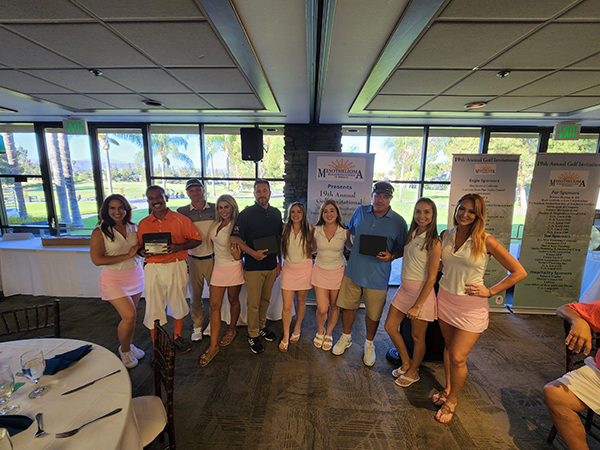
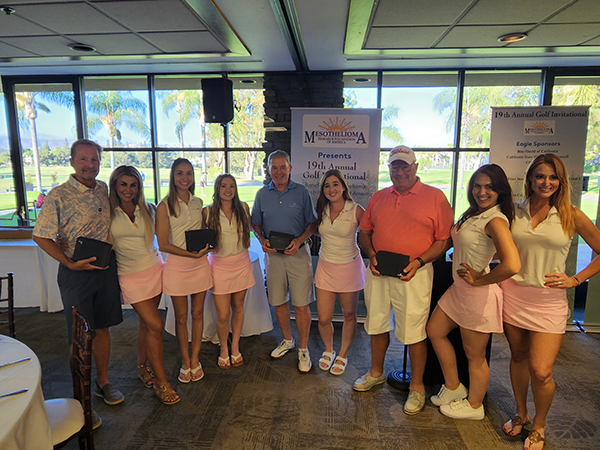
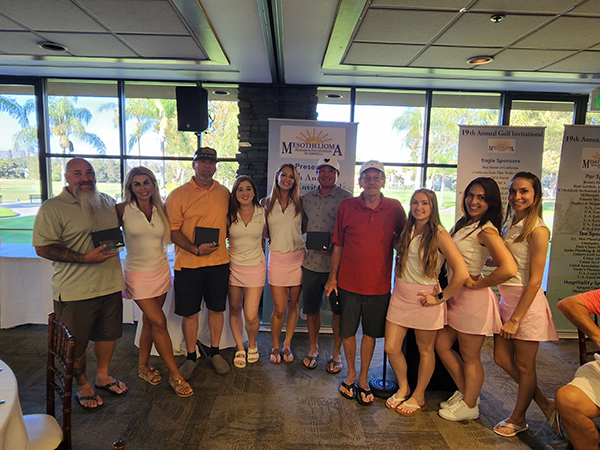
The Mesothelioma Research Foundation of America would like to congratulate the Southern California Pipe Trades District Council 16 for organizing an amazing event! This year was special, marking the 19th Anniversary, and saw a full field of 144 golfers and supporters, joining at the Alta Vista Country Club. Together we generated over $145,000 for mesothelioma research! As always, 100% of the donations received will go directly toward research into clinical trials and treatment options for mesothelioma. Year after year, the organizers at District Council 16 have done an amazing job planning and promoting this event and we cannot thank them enough for their support and dedication. THANK YOU!
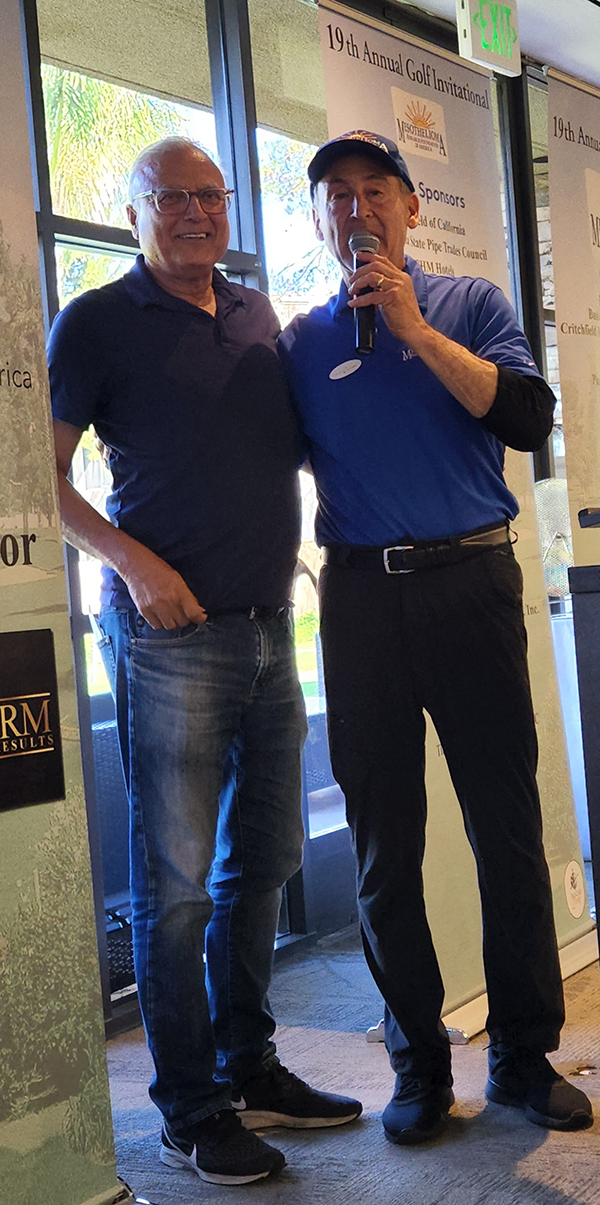
- Parkash JNP 600w.jpg
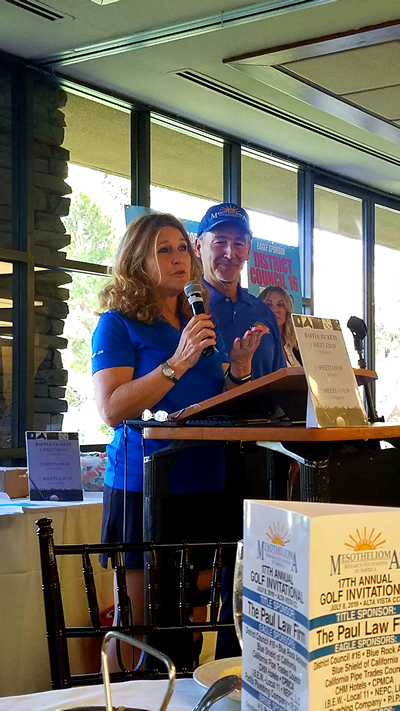
Chairman of the Medical Advisory Committee, Dr. Parkash Gill with the Foundation’s CFO and Founding Board Member, Jerry Neil Paul before Dr. Gill passed along the fantastic news from the lab!
- JNP 600w.jpg
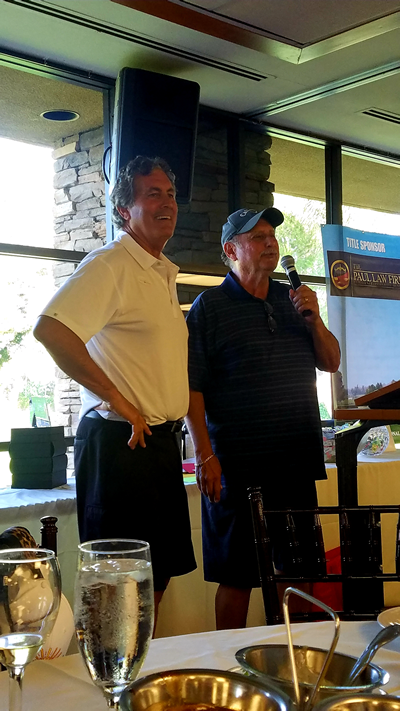
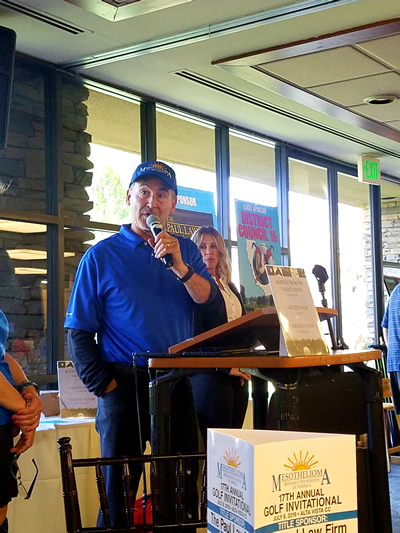
Foundation’s CFO and Founding Board Member, Jerry Neil Paul thanking everyone who continues to support the cause through donations and staying involved in the events held by DC16 and other trades groups. Thank you!
- Vince Ferragamo 600w 10-2022.jpg
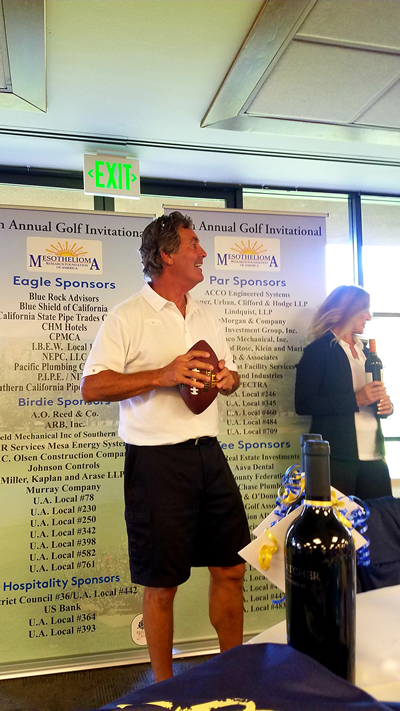
Former LA Rams Quarterback, Vince Ferragamo raffled an autographed football and completed the pass to the winner. Thank you Vince, for coming out and supporting our cause.
- John Ferruccio 600w 10-2022.jpg
We cannot thank DC16 Director of Organizing, John Ferruccio enough for what he has accomplished. With his leadership, this event has grown hugely into what it is today. Thank you John!
- Jaime Wyatt 600w.jpg
Retired Assistant Executive Director of PIPE, Jaime Valdivia and the leadership of UA Local 398, Business Agent, David Hanson, Organizer, Wyatt Stiles and Business Manager, Bill Steiner played a phenomenal round and took home 1st place! Great round guys!
- Hotel Group 600w.jpg
Thank you to John Sanders and the CHM Hotel group for going above and beyond each and every year! Not only are they one of our largest donors but they also know their way around the green. Congrats on the 2nd Place!
- John Doug Team 600w.jpg
UA Local 250’s, Jon Munoz with DC16 and UA Local 78’s, Doug Wilson with Phill Fillers who are always helping hands at the events. Thank you Jon and Doug, and congrats on taking 3rd place!
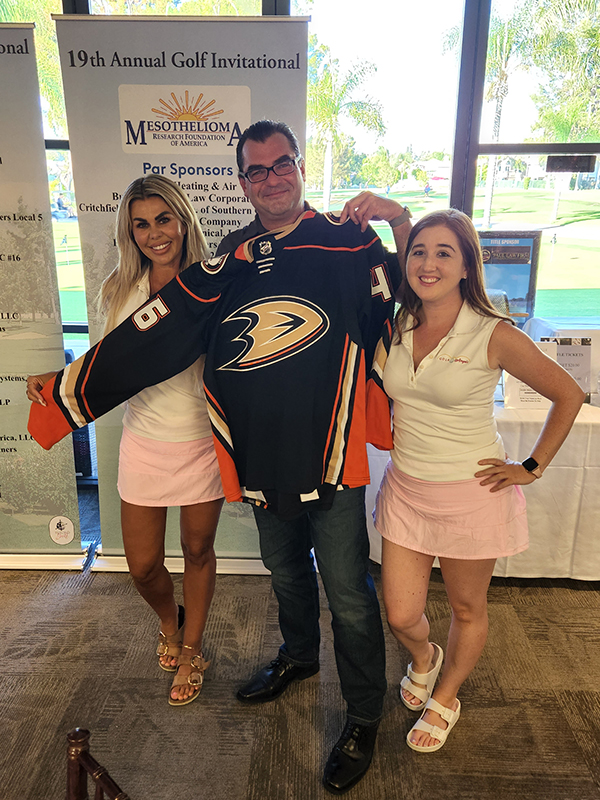
- Ducks Jersey 600w.jpg
An autographed Anaheim Ducks jersey was raffled off and the winner couldn’t have been happier. Congrats Wade!
Participating in the event on behalf of the Foundation was Founding Board Member Jerry Neil Paul, Chairman of the Medical Advisory Committee. Dr. Parkash Gill, and Assistant Executive Director, Shane Rucker. After a great day of golf, Jerry spoke, thanking everyone for their support and highlighted the developments made at USC Norris Comprehensive Cancer Center. Dr. Parkash Gill, Chairman of the Foundation’s Medical Advisory Committee then spoke about the successes in the lab, with EphB-4 continuing to make progress in the FDA clinical trials process! We all hope to see the treatment become accessible and widely used by mesothelioma patients across the United States
The Foundation would like to personally thank Tournament Chairman and DC16 Director of Organizing John Ferruccio, Committee Member and DC 16 Business Manager Rodney Cobos, DC16’s Assistant Business Manager Doug Marian, Foundation Executive Director Elizabeth Ann Paul, Board Member Jerry Neil Paul, and Assistant Executive Director Shane Rucker for the great turnout. We would also like to thank Local 582’s Bob Modica who, for years, has brought his longtime friend Vince Ferragamo to the event to raffle an autographed football and make the most exciting pass of someone’s lifetime. We cannot be prouder of working with these great people. THANK YOU ALL FOR YOUR DEDICATION!!!
Event Date: June 3, 2022
2022 California State Pipe Trades Aim to Cure Mesothelioma Clayshoot
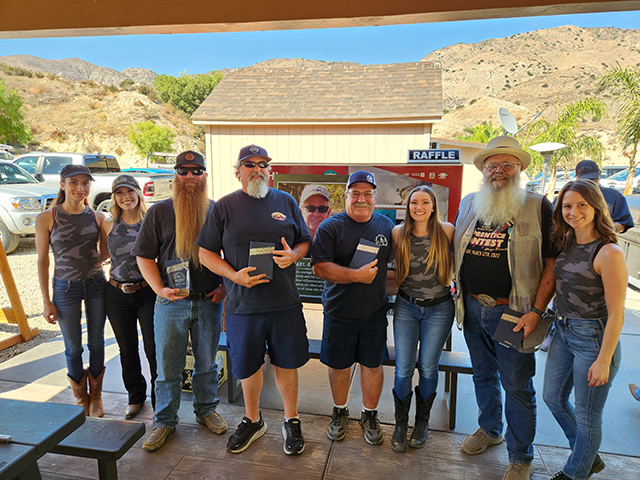
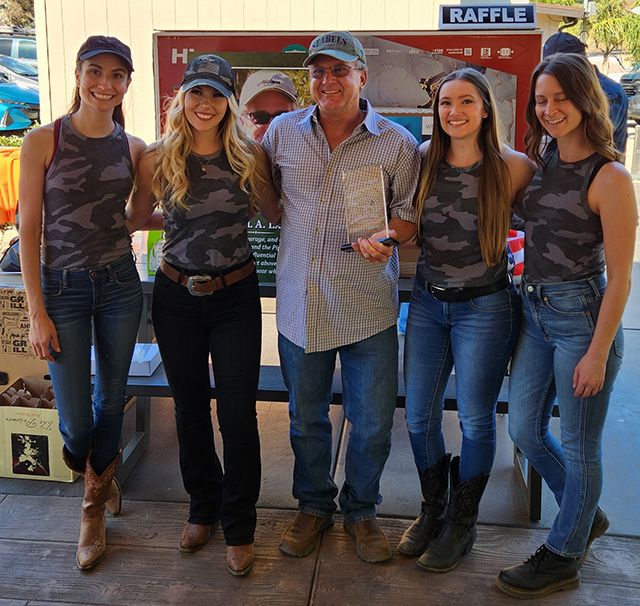
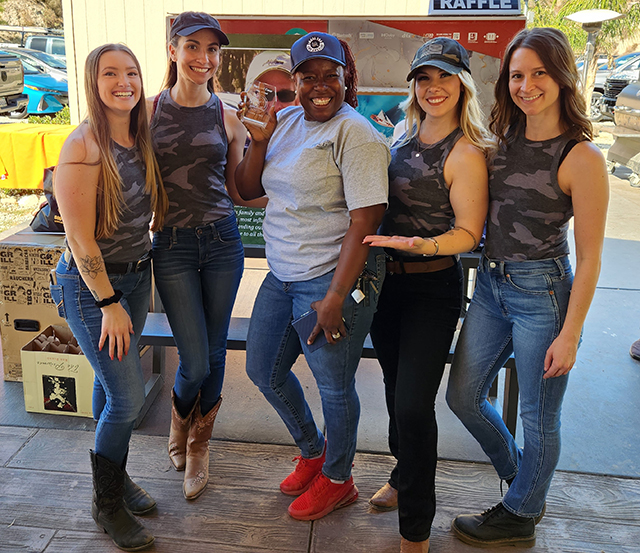
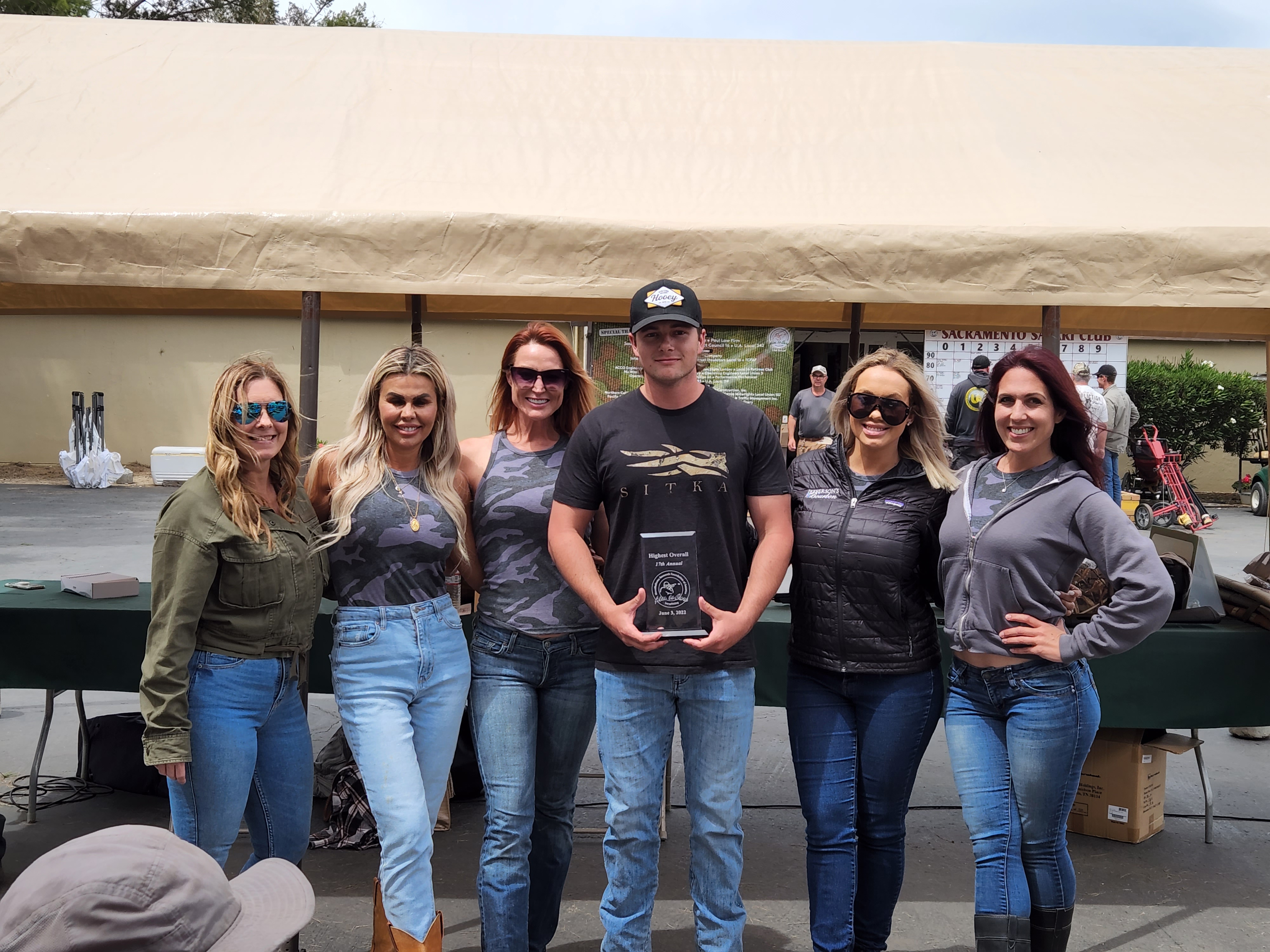
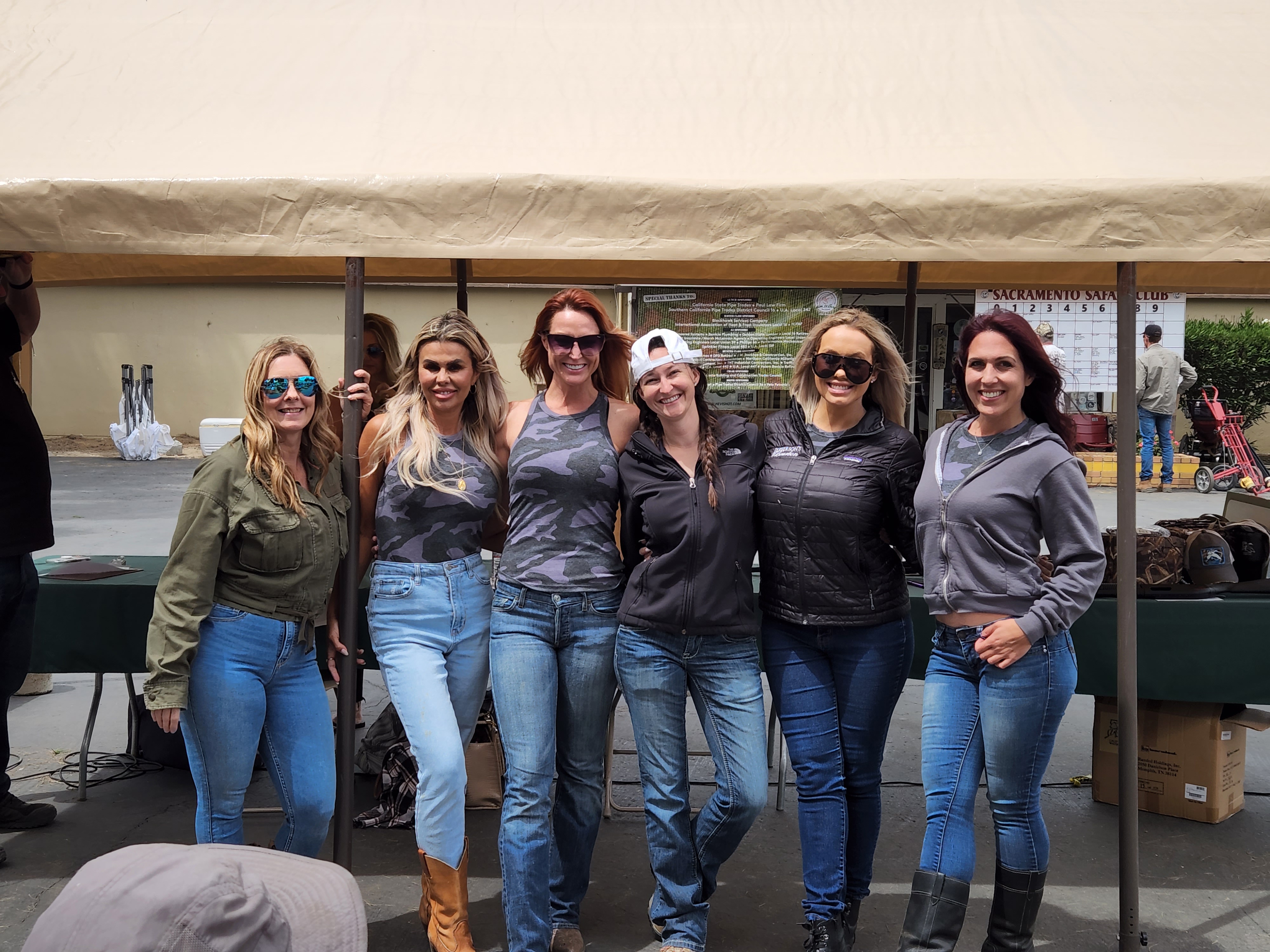
The June 2022 “Aim to Cure” event hosted by the California State Pipe Trades along with Foundation Board Member and Retired International Pipe Trades Representative Jim Kellogg was hugely successful in netting over $55,000 for mesothelioma research!
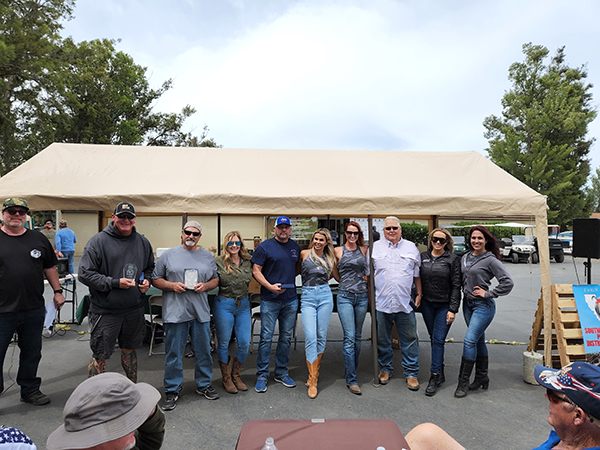
- 1st place 600w.jpg
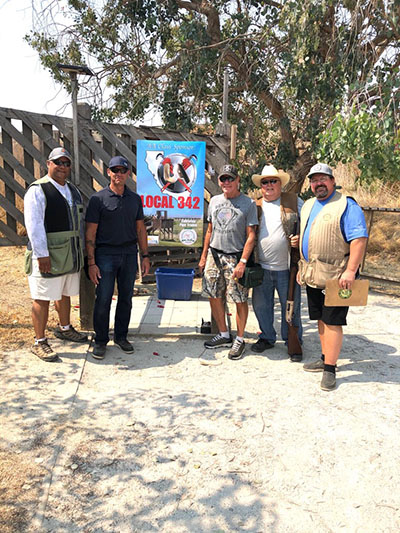
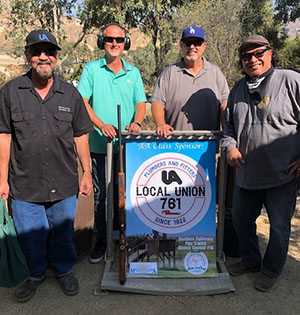
UA Local 342 Plumbers & Steamfitters joined us with multiple teams and took home the 1st Place trophy. Great shooting Ken Pastega, Steve Michich, Randy Lloyd and Bryan Jones!
- 2nd place 600w.jpg
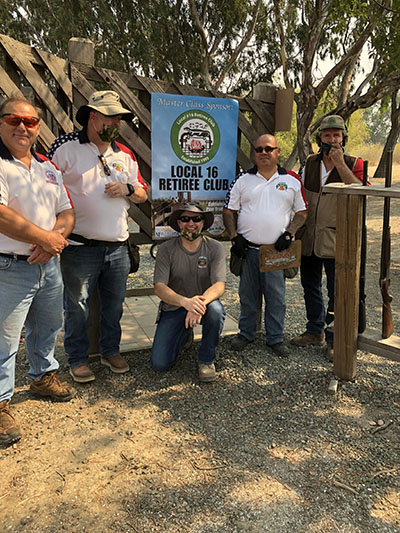
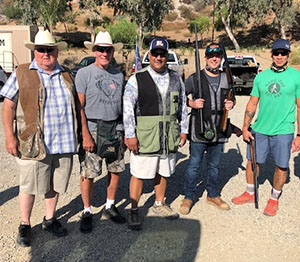
Great shooting gentleman and congratulations on the 2nd Place!
- 3rd place 600w.jpg
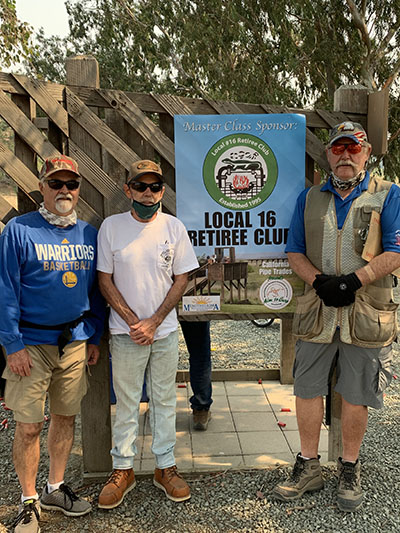
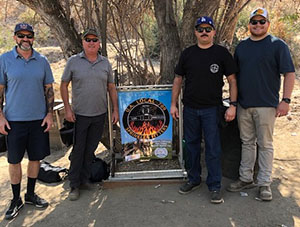
Just a few clays separated 2nd and 3rd Place, fantastic shooting like usual from TNT Industrial Contractors!
- Jim Mike JNP 600w.jpg
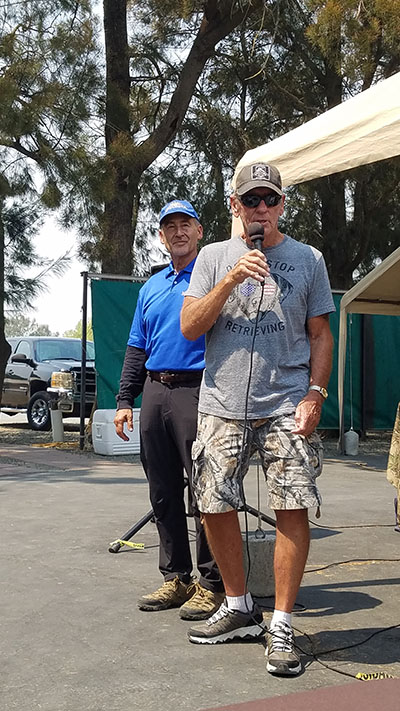
Retired International Pipe Trades Representative, Jim Kellogg, speaking to supporters with the Executive Director of the California State Pipe Trades, Mike Hartley and the Foundation’s Founding Board Member, Jerry Neil Paul. We cannot thank them enough for their work in putting this great event on.
- JNP Aaron 600w.jpg
The Foundation’s Founding Board Member and CFO, Jerry Neil Paul with the current International Pipe Trades Representative, Aaron Stockwell. Thank you for the continued support, Aaron!
- Top Shooter 600w.jpg
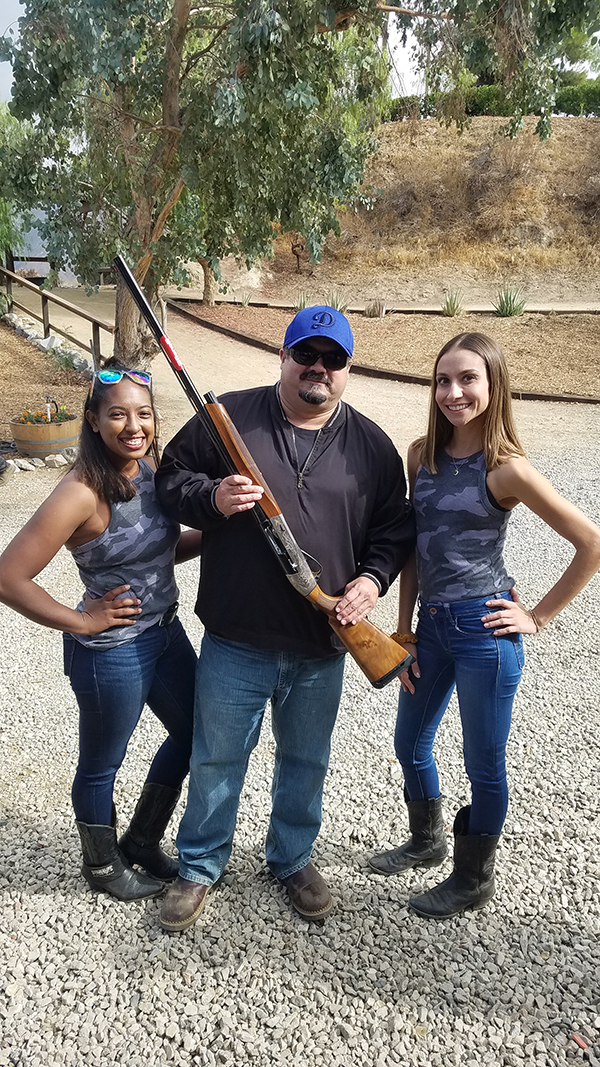
Great shooting, we didn’t see you miss a clay all day long!
- Duck N Cover 600w.jpg
First time ever at a clay shooting event and you did great! Hope to see you back for 2023!
We had another beautiful day for this year’s Aim to Cure event, and a great turn out of participants to support this great cause, with 150 donors supporting the Aim to Cure Mesothelioma! We returned to the Birdslanding Hunting Preserve and Sporting Clay facility in Birdslanding, California which always provides a great venue for the event. Representing the Foundation were Board Members, Jim Kellogg and Jerry Neil Paul and Assistant Executive Director, Shane Rucker.
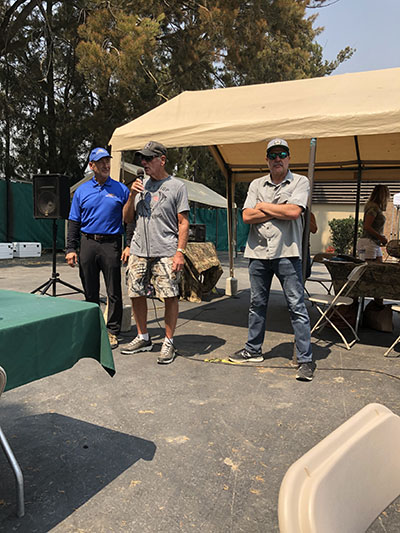
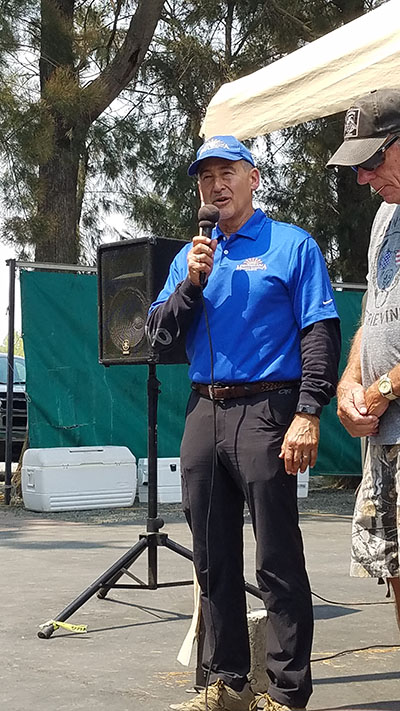
After making their way through the course, supporters and participants joined for lunch and the always popular raffle. Jim Kellogg kicked off the festivities by thanking everyone who come out year after year and have helped grow the event to what it is today. Jim then passed the mic to the Foundation’s Founding Board Member, Jerry Neil Paul, who talked about the advances being made by Dr. Parkash Gill at the USC Norris Comprehensive Cancer Center. The combination of immunotherapy treatment PD1 antibody with Dr. Gill’s treatment EphB-4 is proving to be an effective treatment. Our goal is to see this treatment option move through the FDA Clinical Trial process and become a widely used treatment option across the United States. With the support of participants in events such as “Aim to Cure” advances in mesothelioma treatment options will become a reality. California State Pipe Trades Executive Director Mike Hartley ended the day with the always popular raffle and thanked everyone for their continued support. We are all looking forward to 2023!
As always, 100% of the money raised during the “Aim to Cure” event will go towards mesothelioma cancer research. With these sizable donations we can all be assured that Dr. Gill’s research at USC / Norris Comprehensive Medical Center will move in the right direction. Thank you to all who participated and Jim Kellogg for putting together a fantastic event!
Event Date: May 20, 2022
Second Annual Tommy Engelhard Memorial Golf Outing
I wanted to share with you all an event that was held in memory of Mr. Tommy Engelhardt. Tom passed away at just 65 years old on April 18th, 2021, after a hard fought battle with Mesothelioma. Tom was just shy of retiring when he passed and left behind a wife, Cathy, 3 sons Thomas, Anthony and Andrew, and his sister Diane.
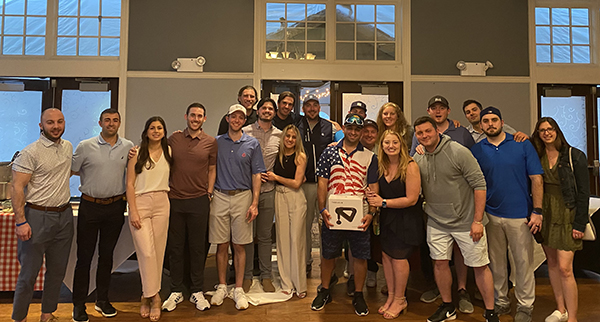
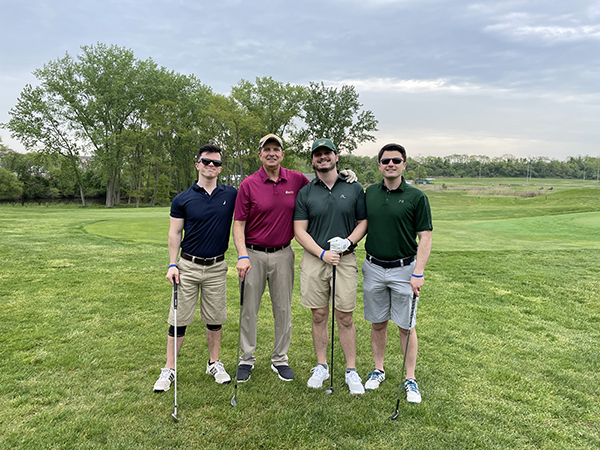
A decision was made to honor Tom’s memory and on May 20, 2022, the Second Annual Tommy Engelhard Memorial Golf Outing was held at Harbor Links Golf Course in Long Island, NY. The event saw 170 friends and family come together to celebrate Tom’s life. The overwhelming response to attend and share the tears, laughs and memories of Tommy led to the raising of over $11,450 in donations. The Mesothelioma Research Foundation of America is honored to have been chosen to put these donations towards making a difference!
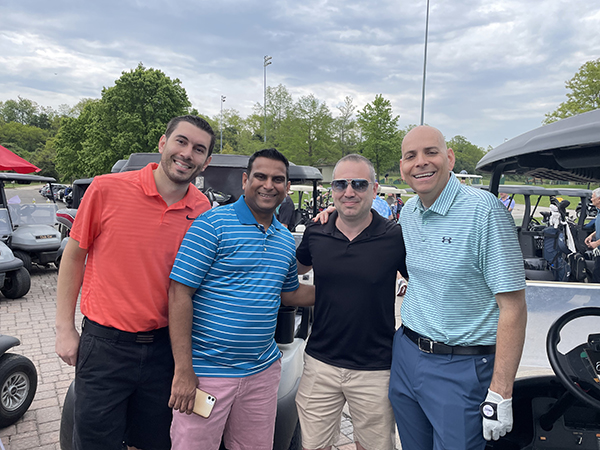
- Engelhard Golf Event 600w.jpg
photo 1 of 9
- Engelhard Golf Event 2 600w.jpg
Photo 2 of 9
- Engelhard Golf Event 3 600w.jpg
photo 3 of 9
- Engelhard Golf Event 4 600w.jpg
photo 4 of 9
- Engelhard Golf Event 5 600w.jpg
photo 5 of 9
- Engelhard Golf Event 7 600w.jpg
photo 7 of 9
- Engelhard Golf Event 8 600w.jpg
photo 8 of 9
- Engelhard Golf Event 9 600w.jpg
photo 9 of 9
As always 100% of the money donated to the Foundation will go directly towards the research into new treatment options for mesothelioma, something Tom’s friends and family were ecstatic to hear! The organizers of the event wanted to thank Elizabeth Paul, Shane Rucker and the Team at the Foundation for the support given to make the event successful.
The Foundation would like to thank Cathy Engelhardt, his brother in law, Nick Manchisi, and all of those who had a hand in putting on a great event and honoring their beloved Tommy.
Event Date: October 11, 2021
District Council 16 Aim to Cure Mesothelioma
The Mesothelioma Research Foundation of America would like to congratulate and thank the Southern California Pipe Trades District Council 16 for organizing a fantastic event to help find a cure for mesothelioma. This year’s DC16 Aim to Cure Mesothelioma event was held at the Moore N Moore Sporting Clays facility in San Fernando, CA and was successful in generating approximately $35,000 for mesothelioma research! Representing the Foundation was Founding Board Member Jerry Neil Paul and Assistant Executive Director Shane Rucker. As always, 100% of the money generated at the event will go directly to mesothelioma research to support clinical trials for better treatment options with the mission and hope for an eventual cure.
The event began with a somber tone, after the sad news that former DC16 Business Manager Mike Layton had passed away a few weeks prior. Mike was a fantastic person, a great friend to many of us at the Foundation and a driving force behind bringing the clayshoot to Southern California. John Ferruccio oversaw a moment of silence for our good friend, Mike, before we headed out on the course with him in all of our hearts. Our thoughts go out to the entire Layton Family.
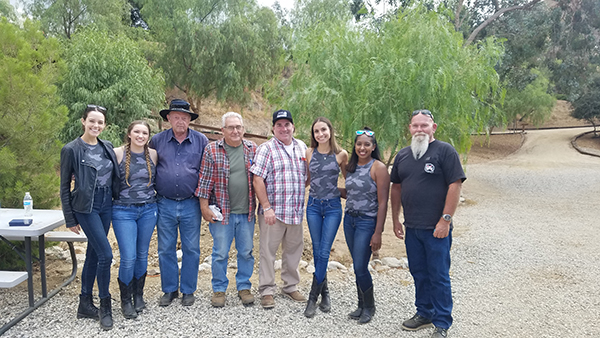
- Local 582 Pipefitters 600w.jpg
Thank you Local 582 for supporting the event. Great score guys!
- Local 460 Will Estes 600w.jpg
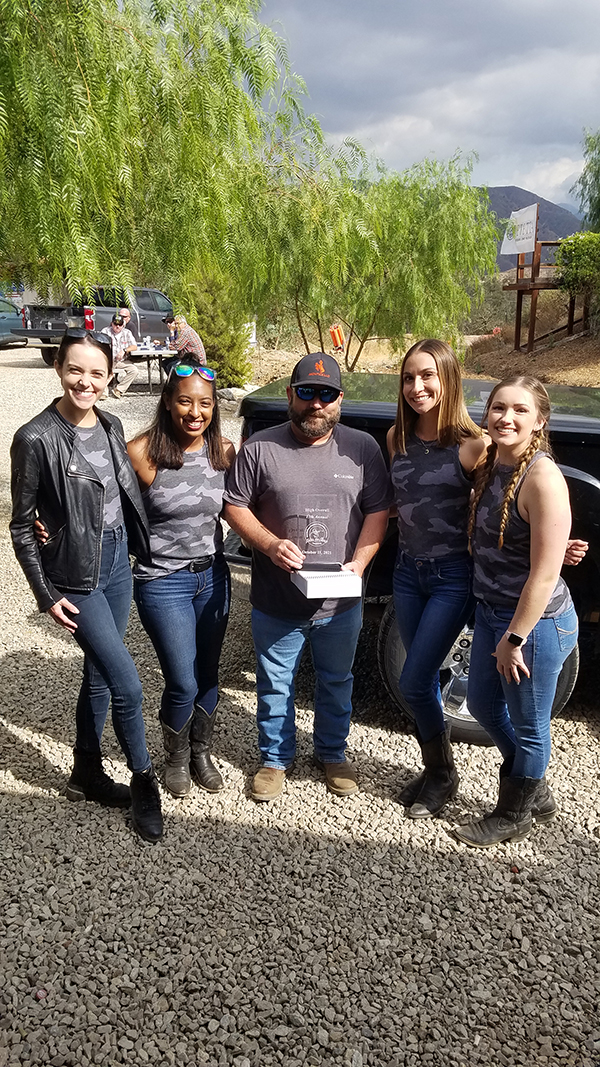
Local 460 Organizer Will Estes took home the Highest Score award with a great round on a course that proved to be tough. Well done Will!
- Local 403 with Bob Jennings and Sid Stolper 600w.jpg
Walt French and his team from UA Local 403 with the Northern California Regional Director for the CA State Building Trades, Bob Jennings, and United Association District 5 Vice President, Sid Stolper. It was great seeing all of you again!
- JNP Speaking 600w 2021-10-11.jpg
The Foundaiton’s Chief Financial Officer and Founding Board Member, Jerry Neil Paul, thanks all of the supporters and gives an update from the Lab at USC Norris Comprehensive Cancer Center.
- Local 460 Javier Flores 600w.jpg
Local 460 Business Agent, Javier Flores took home the grand prize! Congratulations and thank you, Local 460 for coming out and supporting the event!
We had some noteworthy guests who joined us in support of the Foundation and DC 16’s mission. UA Administrative Assistant to the General President, Derrick Kualapai, UA Local 342 Business Manager, Che Timmons, UA International Representative for California and Hawaii Aaron Stockwell and UA Vice President of District 5 Sid Stolper, who was instrumental in the growth of the DC16 events when he served as Business Manager.
After a beautiful day in the Angeles National Forest, the event’s supporters gathered for a great BBQ lunch and the always popular raffle. Before giving away some amazing prizes, sponsors and supporters learned where their hard earned money was going and how it was being used to fight this terrible disease. Speaking at the event on behalf of the Foundation was Board Member and CFO, Jerry Neil Paul. After thanking John Ferruccio for organizing another fantastic event, as well as everyone in attendance, Jerry spoke about the roots of the Foundation and the massive efforts taken in developing new drugs for the treatment of mesothelioma. He then passed along the news from Dr. Gill’s Lab at USC Norris Comprehensive Cancer Medical Center that the immunotherapy treatments EphB-4 and PD-1 were submitted to the FDA Clinical Trials process with collaboration with doctors affiliated with facilities such as UC Davis and University of Chicago.
The Foundation would like to personally thank all of those who organized and supported this year’s events. Without the support and organizing skills of people such as DC 16 Business Manager Rodney Cobos, DC 16 Director of Organizing John Ferruccio and all of the support from DC16. Without the team of volunteers and supporters, these types of events would not be possible. THANK YOU ALL FOR YOUR SUPPORT AND DEDICATION!!!
Event Date: September 20, 2021
Roger Hamilton Memorial Golf Invitational
On September 20, 2021, the Roger Hamilton Memorial Golf Invitational returned for its 19th presentation at the Napa Valley Country Club, to raise funds for mesothelioma cancer research and further the development of new treatment options. This year’s event saw a full field of golfers, who came together to raise over $91,000! As always, 100% of the funds generated will go toward supporting Dr. Parkash Gill’s research at the USC Norris Comprehensive Cancer Center.
The Roger Hamilton Event would not be possible without the continued support of Doug Gamble, Secretary Treasurer of the International Assoc. of Heat & Frost Insulators, Mel Breshears Vice President of the Western States Conference International and Chris Greaney, Business Manager of the International Association of Heat and Frost Insulators Local 16. We thank them all, as they have taken it upon themselves to ensure the continuation of the event and honoring Roger Hamilton’s memory. To date, the Roger Hamilton Memorial Golf Invitational has raised approximately 2 million dollars for mesothelioma research! We also owe our gratitude to Cindy Hamilton and the Hamilton family, along with all of the building trades, contractors and vendors who continue to support the battle to defeat mesothelioma cancer.
- Aaron Doug Mel 600w.jpg
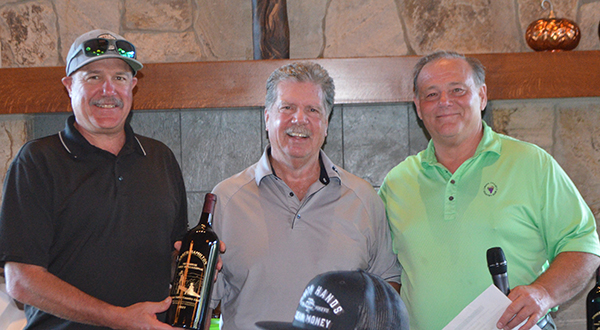
Newly appointed International Pipetrades Representative Aaron Stockwell with Hamilton Golf Committee Chairmen, Doug Gamble and Mel Breshears. Congratulations on the new position Aaron!
- Doug Chris 600w.jpg
Doug Gamle, the General Secretary-Treasurer of the International Association of Heat & Frost Insulators, presents the Heat and Frost Insulators Local 16, Business Manager, Chris Greaney, with a token of gratitude for the continued support in planning the Roger Hamilton Memorial Golf Invitational. Chris and Local 16 Staff are instrumental in the planning and providing the day of support for the event. We cannot thank them all enough!
- Doug Jerry Mel 600w.jpg
The Foundation’s CFO, Jerry Neil Paul (center) with Doug Gamble and Mel Breshears. We cannot thank Doug and Mel enough for their continued efforts in the success of the Roger Hamilton Memorial Golf Invitational Tournament.
- Mel 600w.jpg
Vice President of the Western States Conference of Heat and Frost Insulators, Mel Breshears has worked tirelessly to ensure the Hamilton Event is a continued success and an event that everyone looks forward to every year. Thank you Mel, for your hard work and dedication to this cause.
- Local 5 600w.jpg
Local 5 Heat & Frost Insulators Business Manager Mike Patterson and his team traveled from Los Angeles to Northern California for the event. Thank you Mike and team, for coming up to support the Foundation and enjoying the day with us.
- Shane Jerry 600w.jpg
The Foundation’s Assistant Executive Director, Shane Rucker and CFO Jerry Neil Paul share important news from Dr. Parkash Gill and the Lab at the USC Norris. We are all very excited to hear that the immunotherapy treatments, EphB-4 and PD-1, have been submitted to the FDA Clinical Trials process.
- Volunteer1 600w.jpg
Thank you to all of the Volunteers from Local 16 and the Foundation who had a hand in planning the event as well as those who volunteered their time to offer their assistance at the event. Thank you!
- Volunteers 2 600w.jpg
Local 5 Heat & Frost Insulators Retirees President Alan Pierce flanked by Doug Gamble and Mel Breshears as they present him with a bottle of wine as a thank you for volunteering at the event. Thank you for the hard work and great pictures, Alan!
After a great day on the course, we joined in the clubhouse for drinks, dinner, and catch up with friends. Doug Gamble and Mel Breshears thanked the sponsors who come out year after year, and the volunteers for their roles in making the event run smoothly and successfully. Jerry Neil Paul, one of the Foundation’s founding board members and CFO gave a short history of the event and how much it means to us that the event is as strong as ever after 19 years. Shane Rucker, Assistant Executive Director of the Foundation then provided an update from Dr. Gill, USC Senior Professor, Board Certified Oncologist, Hematologist and head of various FDA approved clinical trials. Dr. Gill is also Chairman of the Medical Advisory Committee of the Mesothelioma Research Foundation of America. Dr. Gill, in his Clinical Trials, has shown the ability to identify mutated cancer genes and the development of treatment options that can target and kill cancer cells. There has been great progress thanks to the success of the Hamilton event. It can also be seen in the development of immunotherapy treatments EphB-4 and PD-1 and their submission to the FDA Clinical Trials process and collaboration with doctors affiliated with facilities such as UC Davis and University of Chicago.
Such a great event takes too many people to thank, but certain individuals play a pivotal role in ensuring its success. To Committee Chairman Doug Gamble, Co-Chair Mel Breshears, Chris Greaney, Mike Patterson, Stan Danielson, Bill Hodges, Mark Plubell, Ben Espinoza, Fortino Curiel, China Soto, Geoff Millar, Alan Pierce, Jerry and Elizabeth Paul, and Shane Rucker: we wish to express our greatest appreciation. Without your efforts and energy this event would not have been possible. Your enduring support guarantees continued research into mesothelioma. With sustained effort, a cure will hopefully be found!
Event Date: August 6, 2021
Heat & Frost Insulators Local 16 Retirees Luncheon
On August 6th, the Heat & Frost Insulators Local 16 retirees group held their first luncheon since the COVID pandemic began in March of 2020. The Foundation’s Founding Board Member, Jerry Neil Paul, was in attendance and eager to give everyone an update as to what has been happening at the Foundation.
Jerry Paul opened by reporting on the success of the first two events held in 2021 and the planning of the Roger Hamilton Golf Invitational scheduled for September 20, 2021. He then passed along the great news from Dr. Parkash Gill’s lab at USC, which continues to successfully treat mesothelioma patients with the combination of immunotherapy drug PD-1 with EphB-4. Jerry highlighted that the treatment has been so affective that it has been submitted to the FDA for Phase 2 clinical trials!
- JNP-Mel-Alan-Geoff 600w.jpg
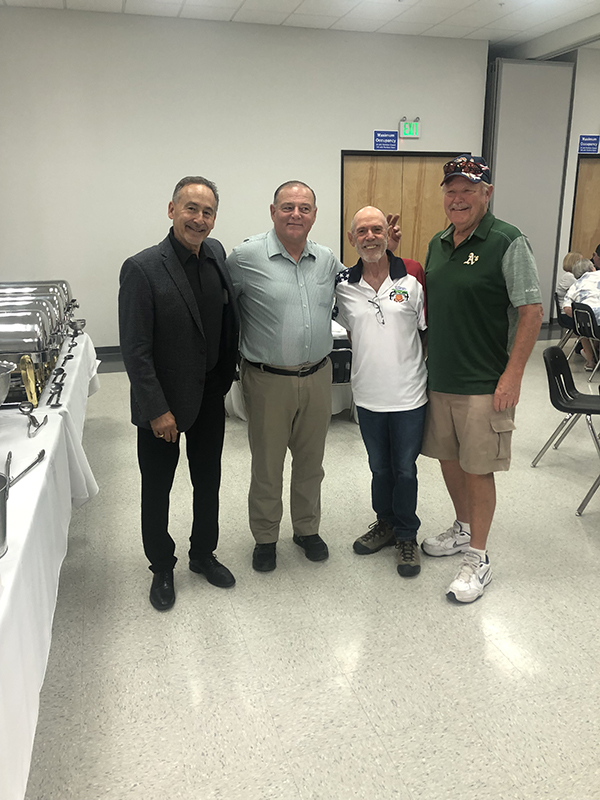
Founding Boardmember Jerry Paul with Vice President of the Western States Conference International, Mel Breshears, Local 16 Retirees Club President Alan Pierce and Retired Insulator and Hamilton Event Committee Member, Geoff Millar.
- Chris-JNP-Yvonne 600w.jpg
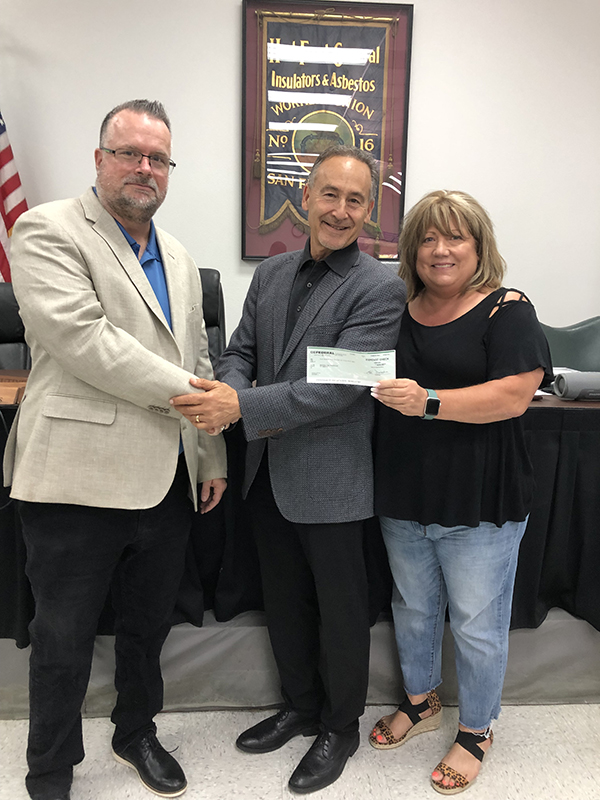
The Foundation’s CFO, Jerry Paul, accepts a donation from Yvonne Lasserre of the Operating Engineers Credit Union and Local 16 Business Manager Chris Greaney. Thank you, OE Credit Union!
- Bill-Chris 600w.jpg
Heat & Frost Insulators Local 16 President Bill Hodges with Local 16 Business Manager Chris Greaney. We cannot thank the staff and leadership at Local 16 enough for their continued partnership and support in hosting the Roger Hamilton Memorial Golf Invitational!
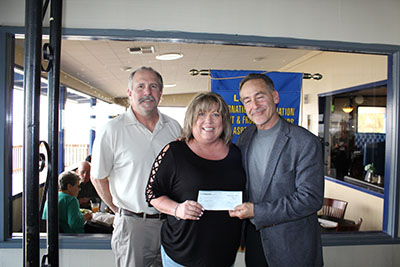
Following his update, Jerry Paul accepted a check on behalf of the Foundation that was presented by Yvonne Lasserre of the Operating Engineers Credit Union from their points program. We cannot thank enough the Operating Engineers and the leadership at Local 16, including Business Manager Chris Greaney, President Bill Hodges and Vice President of the Western States Conference International, Mel Breshears, for their continued support!
Event Date: July 12, 2021
Southern California Pipetrades District Council 16 Annual Golf Invitational
Everyone at the Mesothelioma Research Foundation of America would like to congratulate the Southern California Pipe Trades District Council 16 for organizing an amazing event! We saw a huge turnout for the 18th Annual Golf Invitational at the Alta Vista Country Club, with over 150 golfers, including the return of former LA Rams legendary quarterback, Vince Ferragamo. Vince has become a regular at the event, who was invited by his very good friend and retired UA Local 582 Business Agent, Bob Modica. Together we generated over $140,000 for mesothelioma research, 100% of which will go directly toward research into clinical trials and better treatment options for mesothelioma with the hope of an eventual cure. The leadership of District Council 16, including Tournament Director and Director of Organizing John Ferruccio, Committee Member and Business Manager Rodney Cobos, and Assistant Business Manager, Doug Marian, goes above and beyond in planning an event that everyone looks forward to. We cannot thank them enough for the years of support and dedication. THANK YOU!
- John Ferruccio 600w.jpg
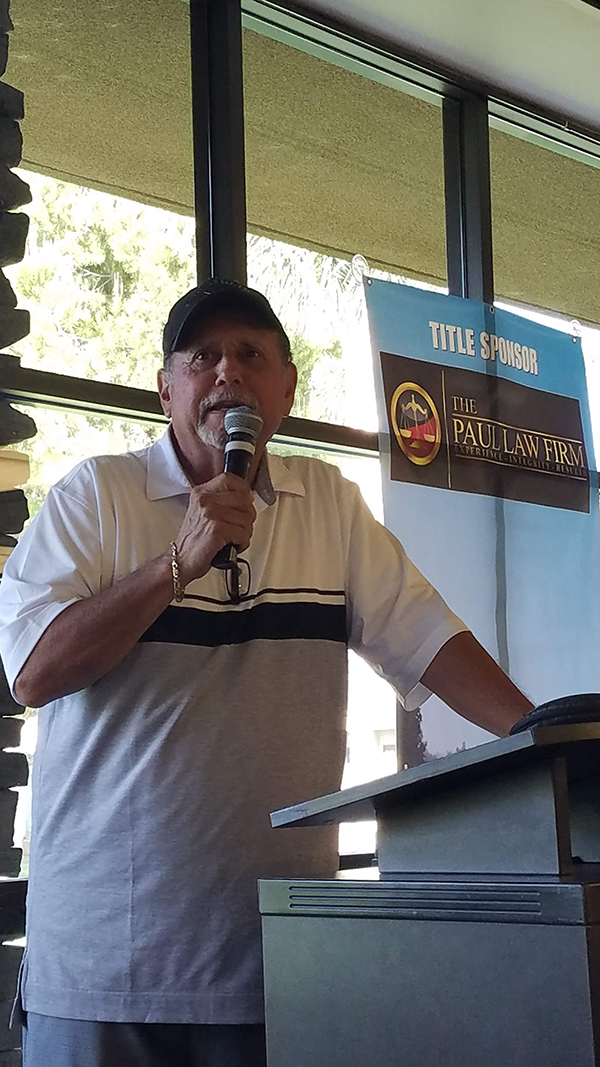
Dhttps://mesorfa.orgistrict Council 16 Director of Organizing and Tournament Director, John Ferruccio, continues to do an amazing job of promoting and building this event. Thank you John and everyone at DC16 for your continued friendship and dedication to the cause!
- UA Team 1 600w.jpg
District Council 16 Assitant Business Manager Doug Marian, UA International Pipe Trades Representative Derrick Kualapai, District Council 16 Business Manager Rodney Cobos and UA Local 484 Business Manager Shane Boston. The Foundation is grateful for your support!
- JNP Speaking 600w.jpg
The Foundation’s Founding Boardmember Jerry Neil Paul, thanks everyone who comes together to support this great event and continue to go above and beyond in raising awareness.
- Dr GIll Speaking 600w.jpg
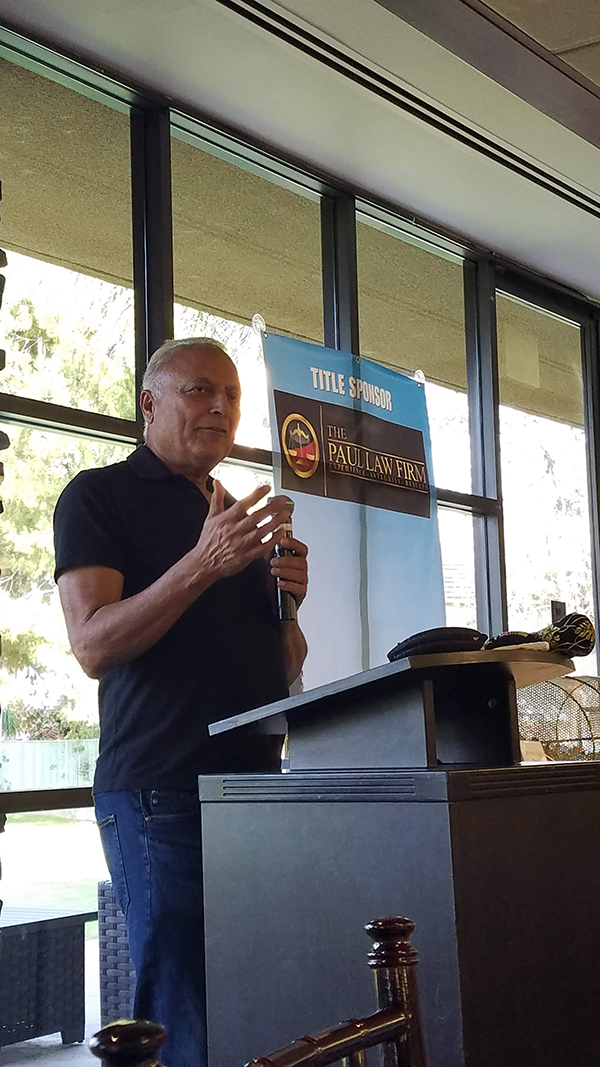
The Foundation’s Chairman of the Medical Advisory, Dr. Pakash Gill, gives an update on the new treatment option of PD-1 and EphB-4 being submitted to the FDA for Phase 2 clinical trials!
- Dr Gill-John 600w.jpg
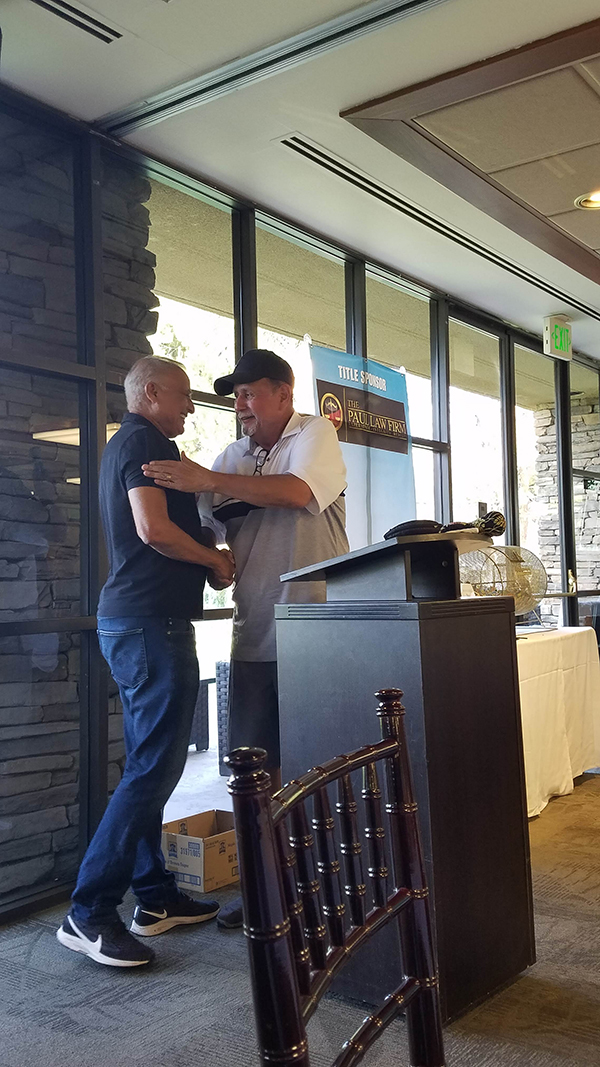
Tournament Director, John Ferruccio, thanks Dr. Gill for coming out to speak at the event and the great work he is doing at the USC Norris Comprehensive Cancer Center in developing new treatment options for this horrible disease.
- Vince Ferragamo 600w.jpg
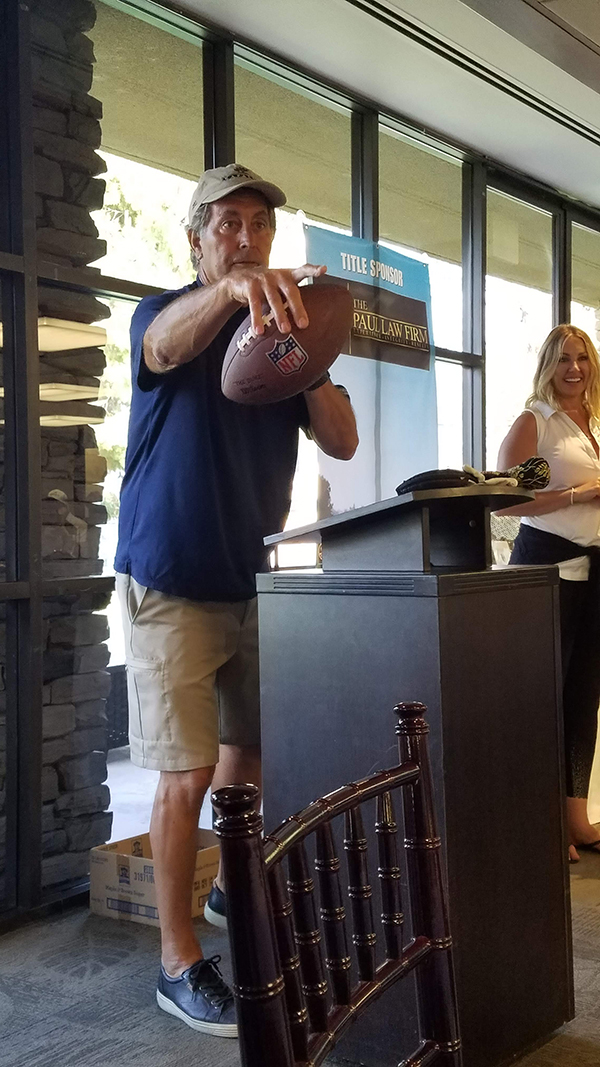
Former Los Angeles Rams quarterback Vince Ferragamo auctions off an autographed football and goes for the pass!
- Parkash-Jaime 600w.jpg
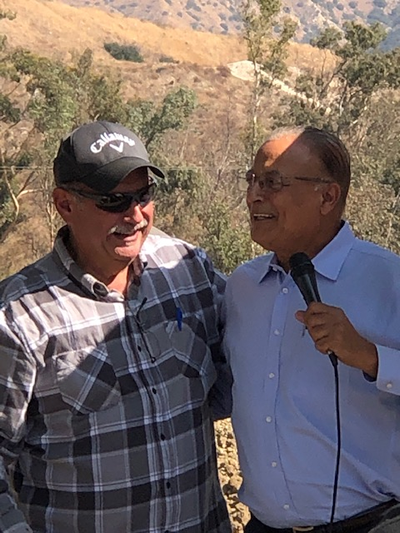
Dr. Parkash Gill and PIPE Assistant Executive Director Jaime Valdivia share a laugh before dinner. Jaime has been a longtime supporter, friend and always dressed to impress!
- CHM 600 h.jpg
John Sanders and the CHM Hotel Group have consistently been one of the event’s top sponsors and put together a couple of teams of great golfers! Thank you, John, and all of the folks at CHM who came out and had fun with us!
- Shane-Local 5 600w.jpg
Assistant Executive Director Shane Rucker tees off on the hole sponsored by Heat and Frost Insulators Local 5 hole. Thank you for your sponsorship, Local 5!
- JNP Shane Tee Off 600w.jpg
Founding Boardmember Jerry Neil Paul and Assistant Executive Director Shane Rucker tee off with District Council 16 and the Paul Law Firm.
- Eddie-Barnes 600w.jpg
Long time friend and supporter, Eddie Barnes, of UA Local 250, traveled from Idaho to participate. Thank you for coming out Eddie!
Participating in the event on behalf of the Foundation was, Board Member Jerry Neil Paul, Chairman of the Medical Advisory Committee, Dr. Parkash Gill, and Assistant Executive Director, Shane Rucker. After a great day of golf, Jerry gave a heartfelt thank you to everyone for supporting the event year after year, and highlighting the new treatment options coming from the lab at USC Norris Comprehensive Cancer Center. Dr. Parkash Gill, Chairman of the Foundation’s Medical Advisory Committee then reported the great news that USC continues to successfully treat mesothelioma patients with the combination of immunotherapy drug PD-1 in combination with EphB-4! Dr. Gill added that there have been several recent research collaborations in addition to the treatment being submitted to the FDA for Phase 2 clinical trials!
The Foundation would like to personally thank all of you who support and turn out for this great event. With the participation from UA International Pipe Trades Representative, Derrick Kualapai and California Pipe Trades Executive Director, Aaron Stockwell, and the organizing skills of people such as DC16’s John Ferruccio, Rodney Cobos, Doug Marian, Foundation Executive Director Elizabeth Ann Paul, Board Member Jerry Neil Paul and Assistant Executive Director, Shane Rucker, this event and great turnout would not be possible. They have all done a fantastic job, year in and year out, and we cannot be more proud of working with these great people. THANK YOU
Event Date: June 4, 2021
Califonia State Pipe Trades’ Aim To Cure – Birdslanding, California
June 4, 2021, marked the 15th annual California State Pipe Trades’ Aim to Cure Mesothelioma sporting clay shoot event hosted by Jim Kellogg, retired U.A. Pipe Trades International Representative and former California State Fish and Game Commissioner, and Aaron Stockwell, the California State Pipetrades Executive Director. Sponsors and the supporters of the Mesothelioma Research Foundation of America converged on the Birds Landing Hunting Preserve and Sporting Clay facility just outside of Concord, California. The event was a huge success, with over 180 shooters participating, helping to raise over $75,000 for mesothelioma research! The fantastic support and turnout ensures the continued development of new and viable treatment options for mesothelioma. The Foundation was represented by Jerry Neil Paul and Jim Kellogg, both Board Members and Assistant Executive Director Shane Rucker.
- JNP Jim 600W.jpg
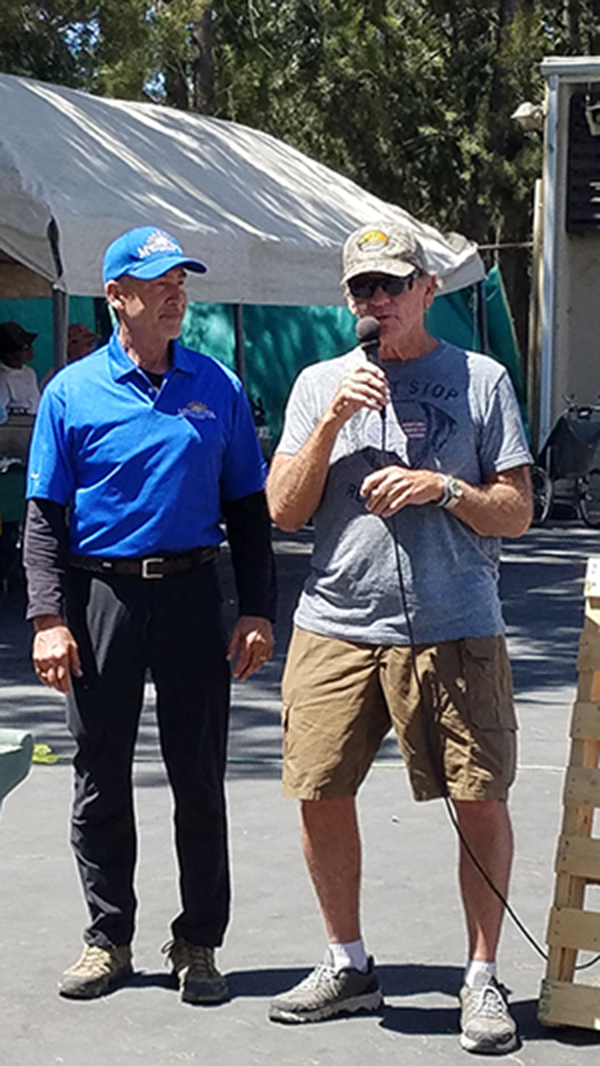
Foundation Boardmembers Jerry Neil Paul and Jim Kellogg kick off the event, thanking everyone for the HUGE turnout of over 180 shooters!
- JNP1 600w px.jpg
Foundation Boardmember, Jerry Neil Paul Paul passes along the fantastic news from Dr. Parkash Gill that his immunotherapy treatment of EphB-4 and PD-1 had been introduced to the FDA for Phase 2 Clinical Trials!
- JNP Geoff Shane 600w px.jpg
Foundation Boardmember Jerry Neil Paul and Assistant Executive Director Shane Rucker with retired Local 16 insulator Geoff Millar.
- Jim Speaking 600w px.jpg
Foundation Boardmember, retired U.A. Pipe Trades International Representative and former California State Fish and Game Commissioner, Jim Kellogg thanks supporters for making this year one of the most successful clay shoots we have held. Thank you Jim!
- Aaron Speaking 2 600w px.jpg
California Pipe Trades Executive Director, Aaron Stockwell takes the mic to run the always popular raffle. We cannot thank Aaron and his staff enough for hosting the event and making a difference in the fight against this terrible disease.
- Mikich Kualapai JNP Timmons 600w px.jpg
UA International Special Representative, Mike Mikich, UA International Representative, Derrick Kualapai, Foundation Boardmember Jerry Neil Paul and UA Local 342 Business Manager, Che Timmons. UA Local 342 came out in massive support of the event! We cannot thank them enough!
- Mel JNP Alan 600w px.jpg
Vice President of the Western States Conference International Insulators, Mel Breshears with Jerry Neil Paul and the Local 16 Insulators Retirees President, Alan Pierce.
- Shane Partch 600w px.jpg
Foundation Assistant Executive Director, Shane Rucker with Retired CA State Pipe Trades Executive Director, Greg Partch.
- UA Local 403 Team 600w px.jpg
Retired Business Manager, Walt French and current Business Manager David Baldwin, brought their team from UA Local 403 in San Luis Obispo to support the cause. Thank you Mike, Walt, and David for making it up to Birds Landing!
- Top Shot-Mitchell 600w px.jpg
Mark Mitchell took this year’s Top Shot award. Mark has been a long-time supporter of the Foundation following a friend’s passing from mesothelioma. Thank you for the support Mark!
- 1st Place- TNT Industrial 600w px.jpg
The 1st Place team from TNT Industrial Contractors are regulars at this event and always bring their A-game.
- Jim-Derrick 600w px.jpg
Foundation Boardmember, retired U.A. Pipe Trades International Representative and former California State Fish and Game Commissioner, Jim Kellogg with UA International Representative, Derrick Kualapai.
After the shoot had concluded, Jim Kellogg thanked attendees, expressing his gratitude for the huge support after a year of uncertainty. Next, Jerry Paul spoke of the importance of staying involved in the fight to raise awareness, highlighting the fantastic development from Dr. Parkash Gill. Shortly before the event, Dr. Gill passed along the wonderful news that his treatment, a combination of immunotherapies EphB-4 and PD-1, had been introduced to the FDA for Phase 2 Clinical Trials! This is a huge milestone. The treatment is currently being administered to mesothelioma patients with support from the USC Norris Comprehensive Cancer Center and in collaboration with UCLA and UC Davis. Jerry Paul then passed the mic to Aaron Stockwell to say a few words before raffling off a few items to support the cause.
As always, 100% of the funds raised at the Birdslanding event will go directly towards mesothelioma cancer research at Dr. Parkash Gill’s lab at USC Norris Comprehensive Medical Center. With these sizable donations, we can be assured that Dr. Gill’s mesothelioma cancer research at USC/ Norris Comprehensive Medical Center will be moving in the right direction with the goal of expanding the clinical trials to other interested universities. Thank you to all who participated and made the event a success!
%20300px.jpg)